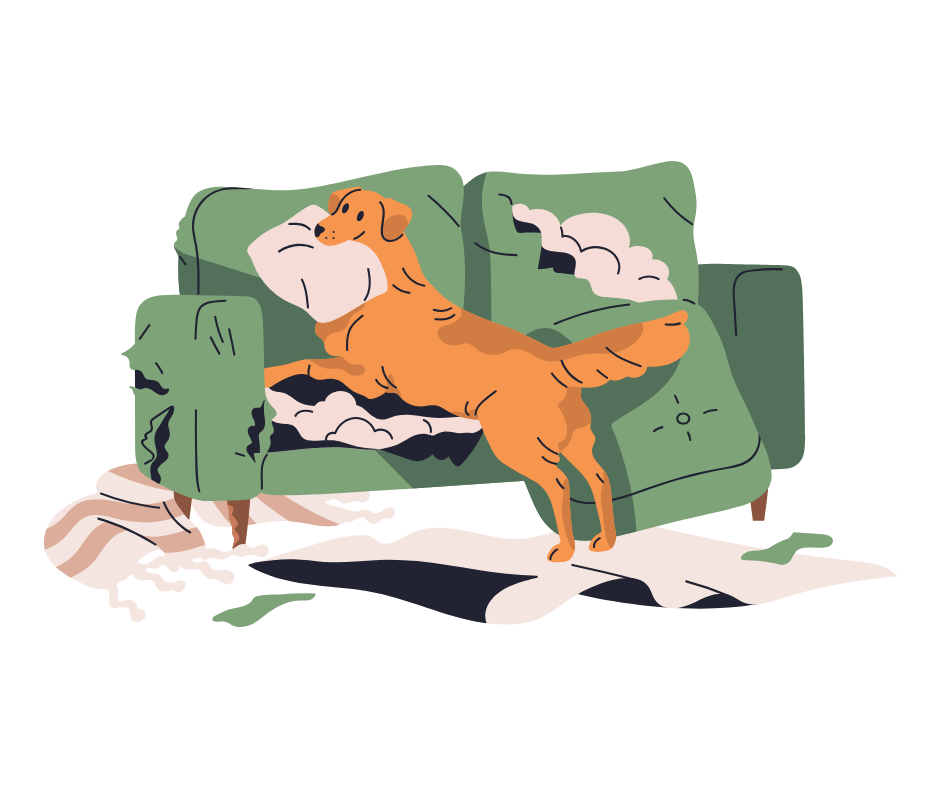
As dog owners, we often focus on physical exercise to keep our dogs healthy—regular walks, playtime, and trips to the park are essential. But did you know that mental stimulation is just as important for your dog’s overall well-being? While dogs may not have office jobs or school assignments, their brains still need a workout. In fact, mental stimulation can help prevent behavioral problems, improve their quality of life, and even tire them out just as much as physical exercise.
In this blog, we’ll explore why mental stimulation is so beneficial for dogs, and how you can easily provide it through various activities and games. Ready to give your dog’s brain a workout? Let’s dive in!
Why Mental Stimulation is Important for Dogs
1. Prevents Boredom and Destructive Behavior
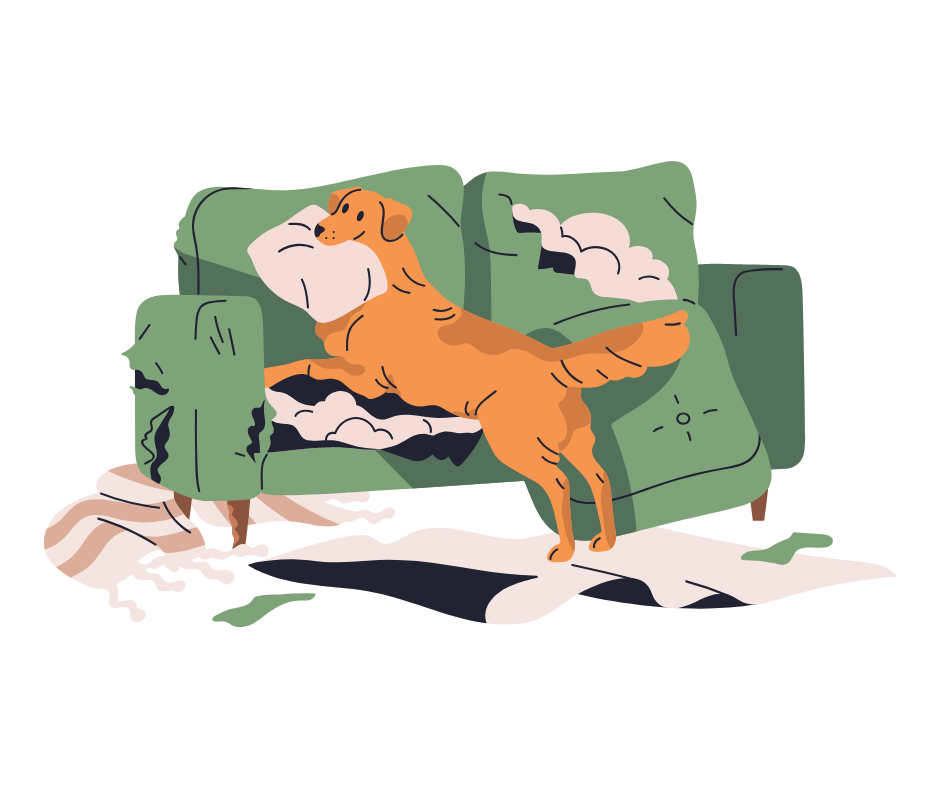
Just like us, dogs need variety to stay engaged. Without enough mental stimulation, dogs can become bored, leading to unwanted behaviors such as chewing on furniture, excessive barking, or digging. Mental enrichment helps to keep your dog entertained and out of trouble. When their brains are engaged, they’re less likely to engage in destructive behaviors, which is a win win for both dog and owner!
2. Promotes a Healthy Mind
Mental exercise is just as important as physical exercise for a dog’s health. Keeping their brain active can slow down cognitive decline, especially in senior dogs. Dogs, like people, can experience cognitive dysfunction syndrome (CDS), which is similar to dementia in humans. Providing regular mental stimulation can help improve your dog’s memory, focus, and learning abilities, keeping their mind sharp well into their golden years.
3. Reduces Anxiety and Stress

Mental stimulation can be an effective tool in managing anxiety and stress in dogs. Engaging their brains in problem-solving activities or focus-based tasks can help distract them from triggers that cause anxiety, such as being left alone or loud noises. Regular mental workouts can also have a calming effect, as it releases endorphins, the brain’s “feel-good” chemicals.
4. Strengthens the Bond Between You and Your Dog
Engaging in interactive activities with your dog, such as training or puzzle games, strengthens the bond you share. Dogs love it when they feel like they’re part of a team, and they thrive on the attention and praise they get from their human companions. Training sessions and brain games also provide an opportunity to improve your dog’s obedience and listening skills.
5. Tires Them Out
You may think that only physical exercise can tire your dog out, but mental stimulation can be just as effective. For dogs who are high-energy but can’t handle long physical workouts (such as puppies or senior dogs), mental exercises can be a great way to burn off excess energy without putting strain on their bodies.
Ways to Mentally Stimulate Your Dog
1. Interactive Toys and Puzzle Games
One of the easiest ways to provide mental stimulation for your dog is through interactive toys and puzzle games. These toys are designed to challenge your dog to solve problems or manipulate objects to get a reward, usually food or treats. Popular options include:
- Kong Toys: Fill a Kong with peanut butter or other dog-safe treats and freeze it for an extra challenge. I like to use a mixture of peanut butter, (make sure it doesn’t contain xylitol), natural yoghurt, mashed banana or pumpkin puree. If you’re feeling lazy, which I often do… you can pick up some squeezy sachets of baby food such as apples and bananas to fill Kongs and Licki mats. Its convenient and mess free!
- Puzzle Feeders: Toys like the Outward Hound Nina Ottosson puzzle require your dog to figure out how to access hidden treats, which keeps their mind active. Just fill it with some kibble and let your dog do the rest of the work! You can pick this or similar puzzle games up from most pet shops or online, but do check your local pet shop first!
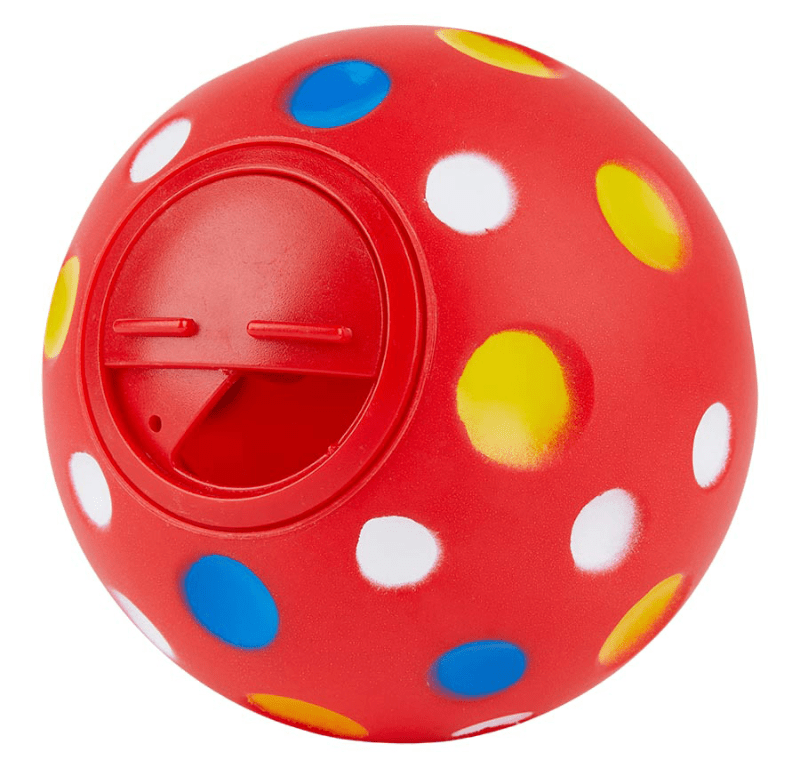
- Treat Dispensing Balls: These toys release treats when rolled in specific ways, encouraging your dog to engage with them for longer periods of time. My collie Bowie LOVES this treat ball from Pets at Home, he can spend 20 minutes on this alone.
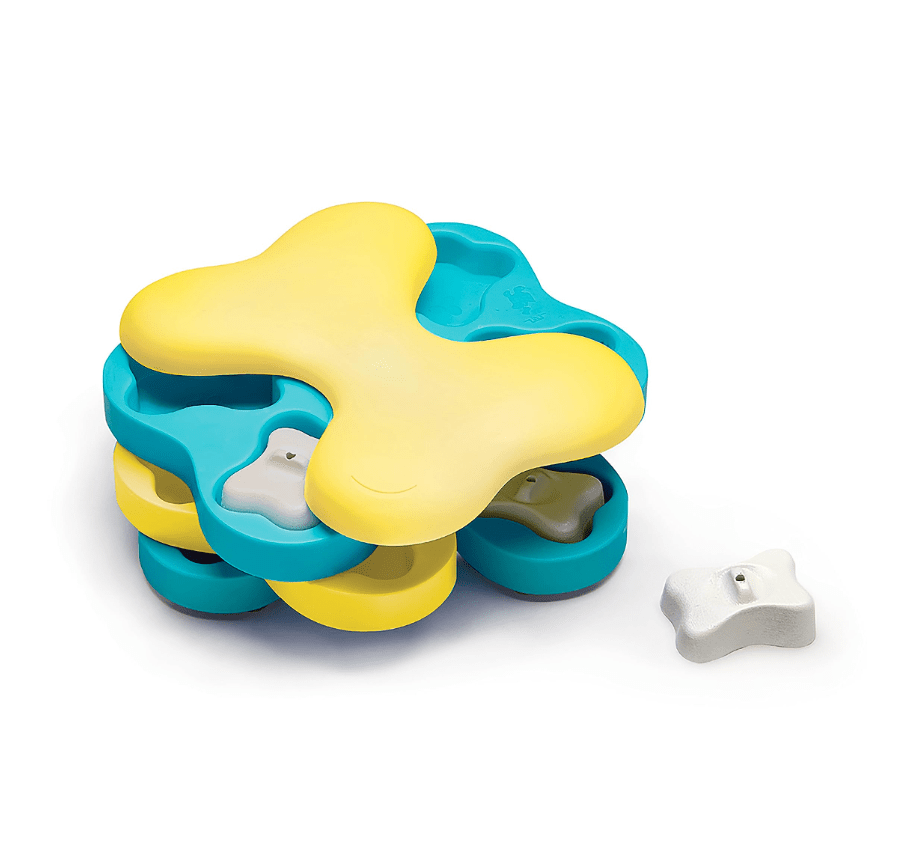
Outward Hound Nina Ottosson puzzle
These toys work wonders for dogs who love food and can provide hours of entertainment and problem-solving fun.
2. Scent Games
Dogs have an incredibly powerful sense of smell, and scent-based activities are one of the most rewarding ways to engage their minds. You can set up simple scent games to tap into their natural instincts:
- Hide and Seek: Hide treats or your dog’s favorite toy around the house and let them use their nose to find them.
- Scent Trails: Create a scent trail using a strong-smelling treat or item and lead your dog to a “treasure” at the end. I have a useful reel on my instagram which shows my dog `Bowie searching around the living room for a piece of cloth that is scented with cloves. All you need is an old tea towel or piece of fabric, some cloves and a jar! I’ll link the video below, feel free to check it out!
- Find the Treat: Place several cups or containers upside down and hide a treat under one of them. Let your dog figure out which one holds the prize.
3. Training Sessions
Training isn’t just about teaching your dog basic commands; it’s also an excellent mental exercise. Regular training sessions can help improve your dog’s obedience, sharpen their focus, and build a deeper connection between you two. You can teach new tricks, practice old ones, or even work on specific skills to help with behavioral issues.
Some ideas for training sessions include:
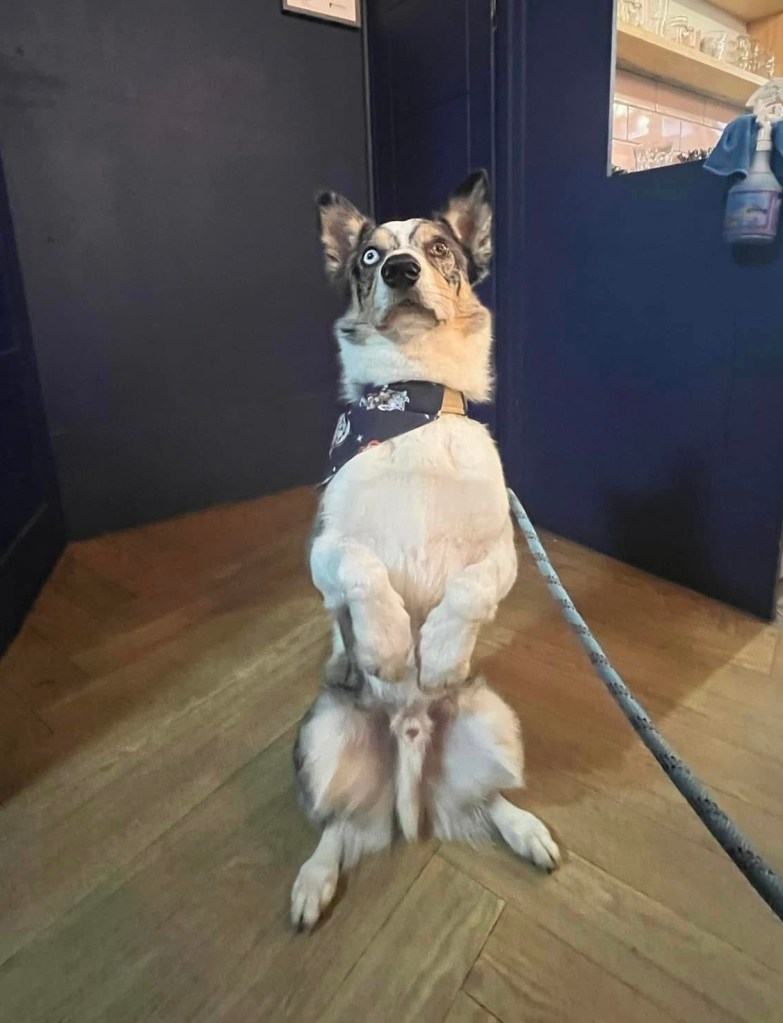
Learning New Tricks: Teaching your dog tricks like “roll over,” “play dead,” or “spin” is fun and mentally challenging. My favourite trick of Bowies is “sit pretty”
- Interactive Commands: Work on commands like “sit,” “stay,” “down,” or “come” in various environments with distractions to challenge your dog’s focus.
- Clicker Training: Use a clicker to mark the exact moment your dog performs the correct behavior, reinforcing learning and adding mental stimulation.
Training sessions can be short but frequent to keep your dog’s brain engaged throughout the day.
Final Thoughts: Keep Their Minds Active!
Mental stimulation is a vital part of your dog’s overall health, happiness, and well-being. It helps prevent boredom, promotes cognitive health, and deepens your bond with your furry friend. By incorporating a variety of simple activities like interactive toys, scent games and training, you can provide the mental exercise your dog needs to thrive.
So, the next time you’re feeling guilty for skipping a walk or your dog seems restless, try one of these mentally stimulating activities instead. You’ll be surprised by how much it tires them out—both mentally and physically!
Have any other fun ideas for mentally stimulating your dog? Share them in the comments!
 No Ruff Days
love this we love to play find the human – put them in a sit/stay or wait then go and hide and recall them – entertaining for dog and me!
LikeLike
Haha we love playing this too! I always hide being trees in the woods and he races around trying to find which one I’m behind.
LikeLike
After seeing your reel on scent activities, I’ve taught Rebel how to “search”. He loves it, and it’s a great wind-down activity for evenings, or when it’s rainy and he’s driving me crazy!
I always feed him his dinner in a snuffle mat or a food dispensing ball, it definitely makes my evenings easier as he has had a bit of brain work to calm him down!
LikeLike
I’m glad you found it helpful! Snuffle mats are also a favourite of mine!
LikeLike